
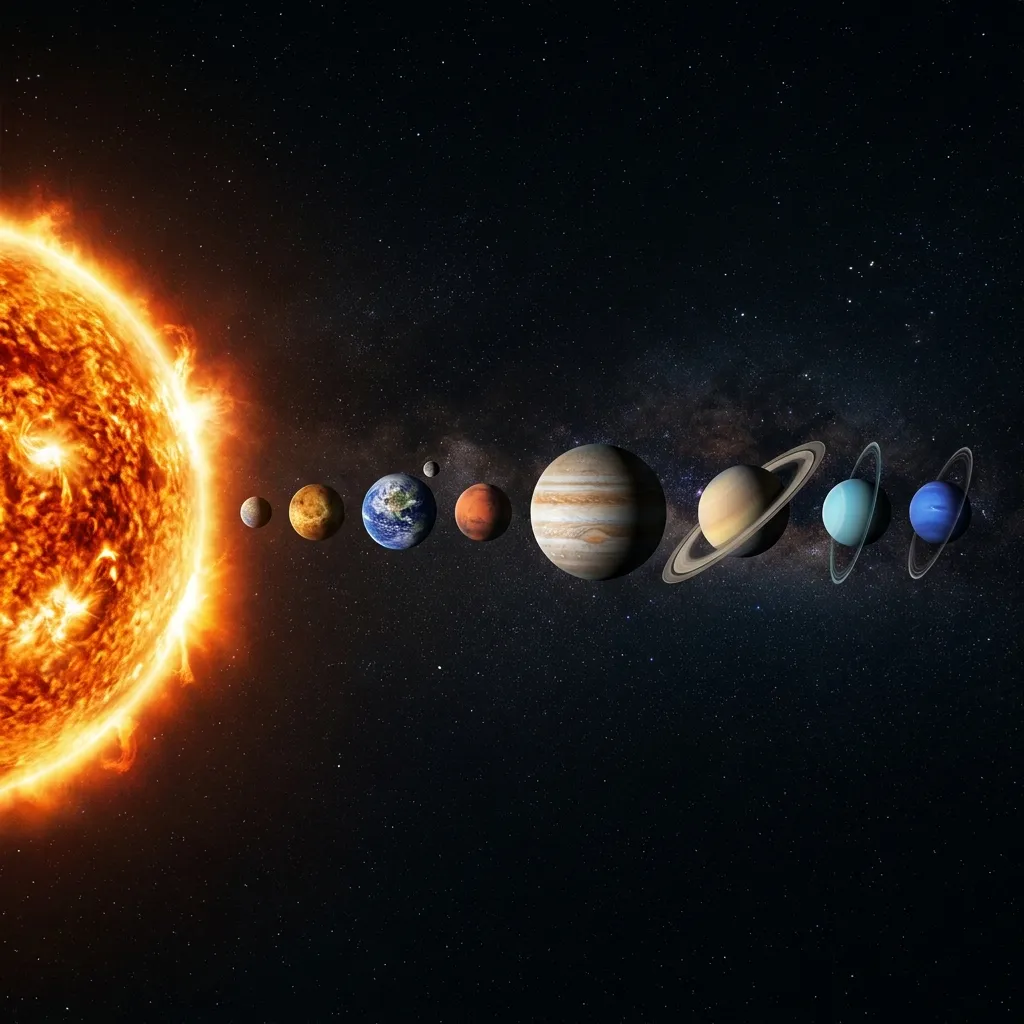
Eight worlds,
one Sun.
Live orbital positions of every planet in the Solar System, computed from mean anomalies. Tap a world for its story.
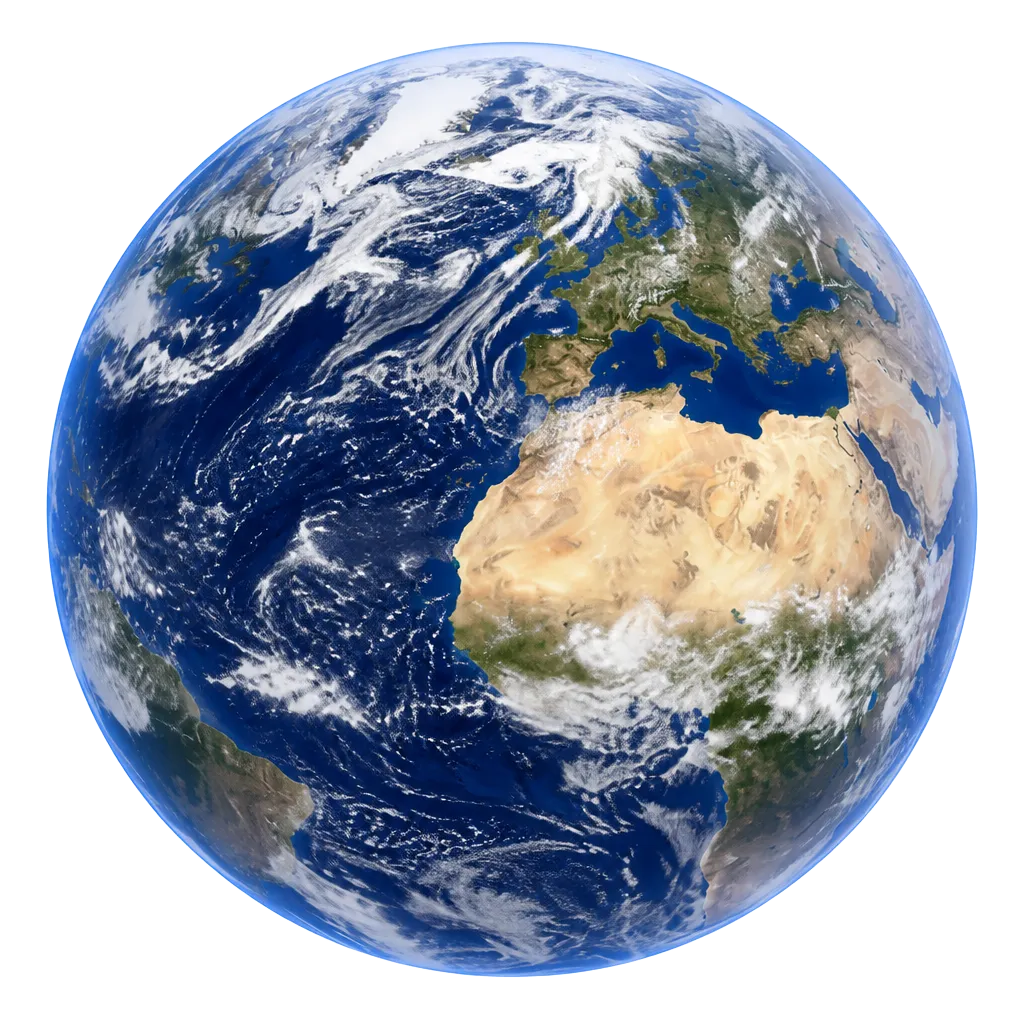
Earth
The only place in the known universe where an ocean has ever been observed.
- 99.86%Percentage of the solar system's total mass contained entirely within the Sun.
- 250 MillionYears it takes our solar system to complete one orbit around the Milky Way galaxy.
Discover the Solar System
Our solar system is a vast and dynamic neighborhood centered around our local star, the Sun. It is home to eight major planets, each with unique atmospheric conditions, geology, and orbital characteristics. From the scorching, cratered surface of Mercury to the massive, swirling gas storms of Jupiter, studying these planetary bodies helps us understand the formation of Earth and the potential for life elsewhere in the universe.
The Inner Terrestrial Planets
The four planets closest to the sun—Mercury, Venus, Earth, and Mars—are known as terrestrial planets. They are primarily composed of rock and metal and have solid surfaces. Venus features a runaway greenhouse effect making it the hottest planet, while Mars is a frozen desert that scientists believe once harbored flowing water.
The Outer Gas Giants
Jupiter and Saturn are massive gas giants composed mostly of hydrogen and helium, while Uranus and Neptune are ice giants containing heavier elements like oxygen, carbon, and nitrogen. These outer planets host incredible ring systems and dozens of fascinating moons, such as Jupiter's Europa and Saturn's Enceladus, which harbor subsurface oceans.