
Nebulae &
star formation.
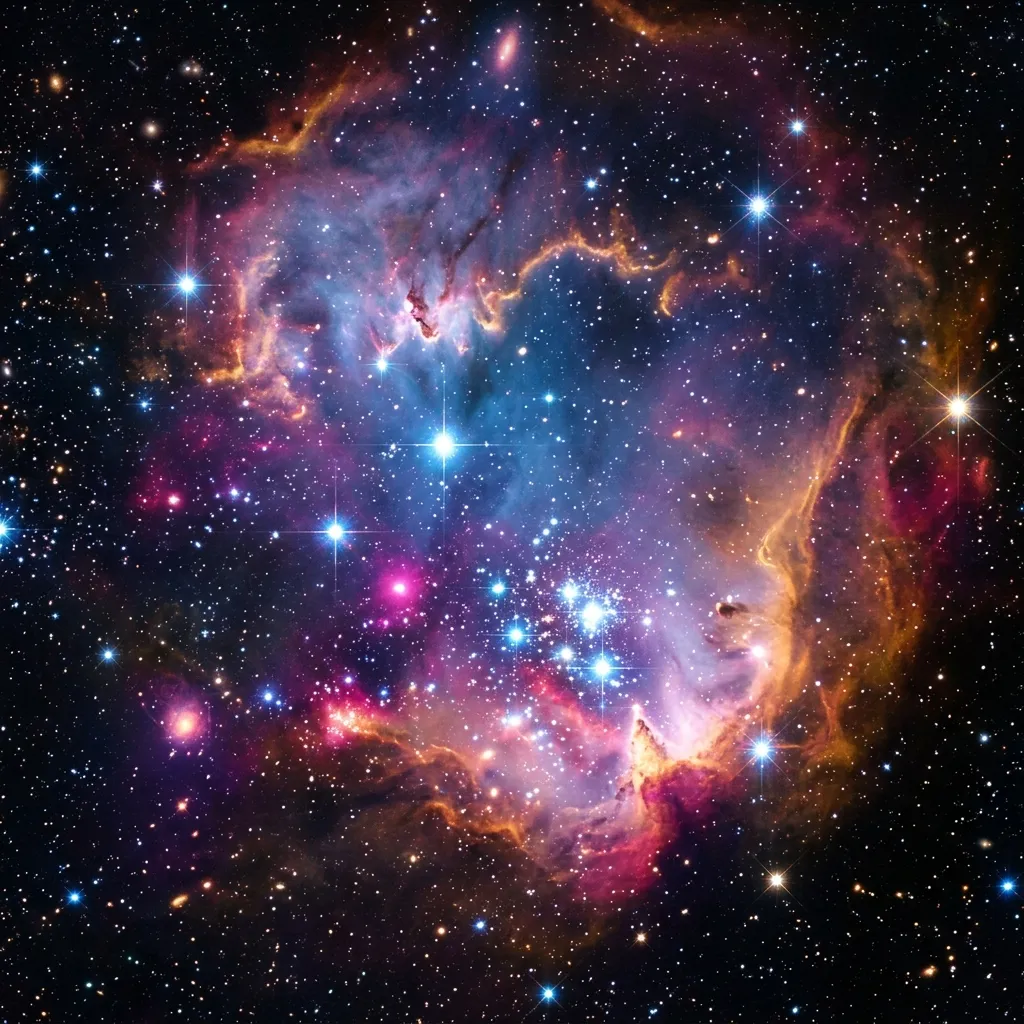
Stars are not eternal. They condense out of cold clouds of gas, burn for millions or billions of years, then return their matter to the interstellar medium — often as the same nebulae the next generation will collapse out of.
Five kinds of cloud.
"Nebula" just means cloud. But astronomers sort them by how they glow, what they're made of, and what phase of stellar life they belong to.
- 24 Light-YearsDiameter of the Orion Nebula, the closest region of massive star formation to Earth.
- 10,000 °CAverage temperature of an emission nebula, glowing brightly from ionized hydrogen gas.
- 5 BillionYears until our Sun exhausts its fuel and blossoms into a glowing planetary nebula.
Glowing hydrogen ignited by newborn stars
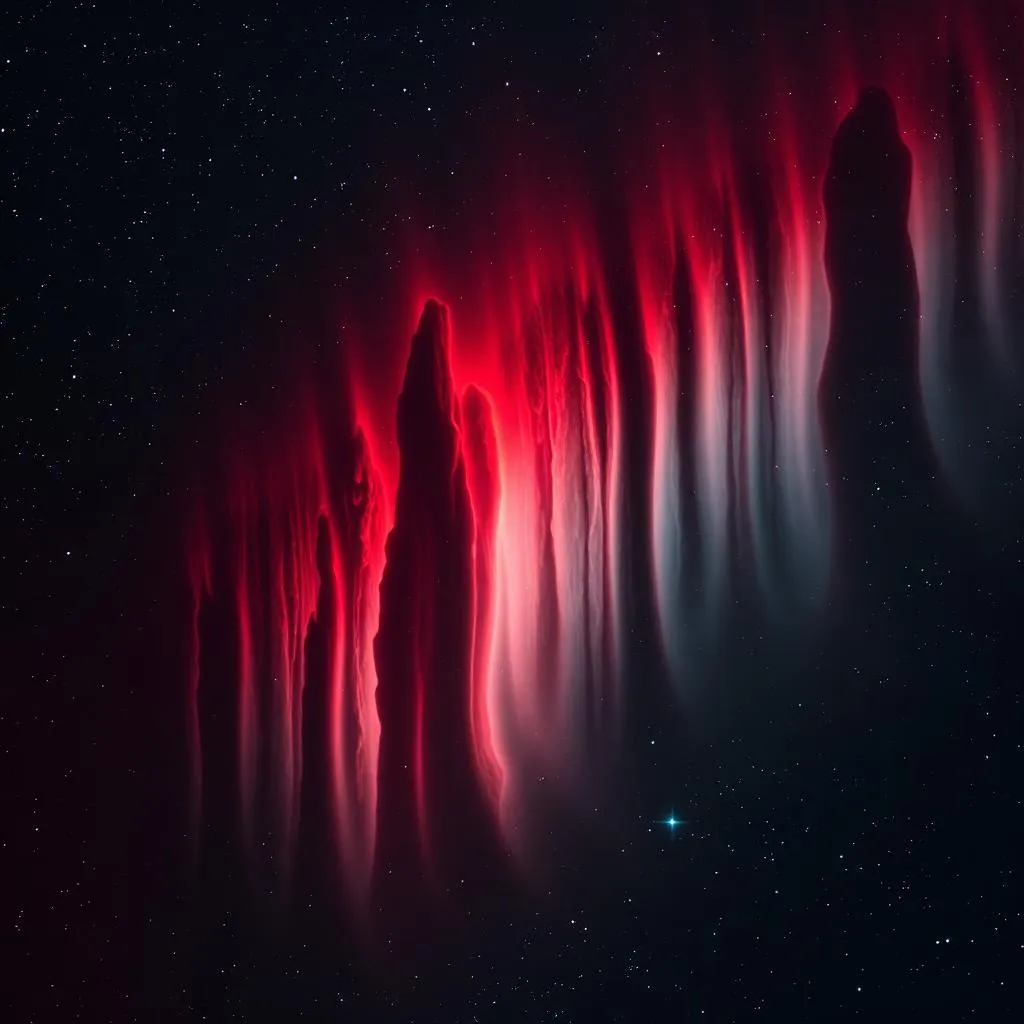
Clouds of hydrogen gas ionized by ultraviolet light from very hot young stars. Electrons recombine and emit a characteristic red glow. These are the classic stellar nurseries.
- Temperature
- ~10,000 K
- Appearance
- Deep red / pink (H-alpha)
- Example
- Orion Nebula (M42), Eagle Nebula (M16)
Real photos of emission nebulae.
Fetched live from NASA's public image archive for the search "Orion Nebula".
How a star is
assembled.
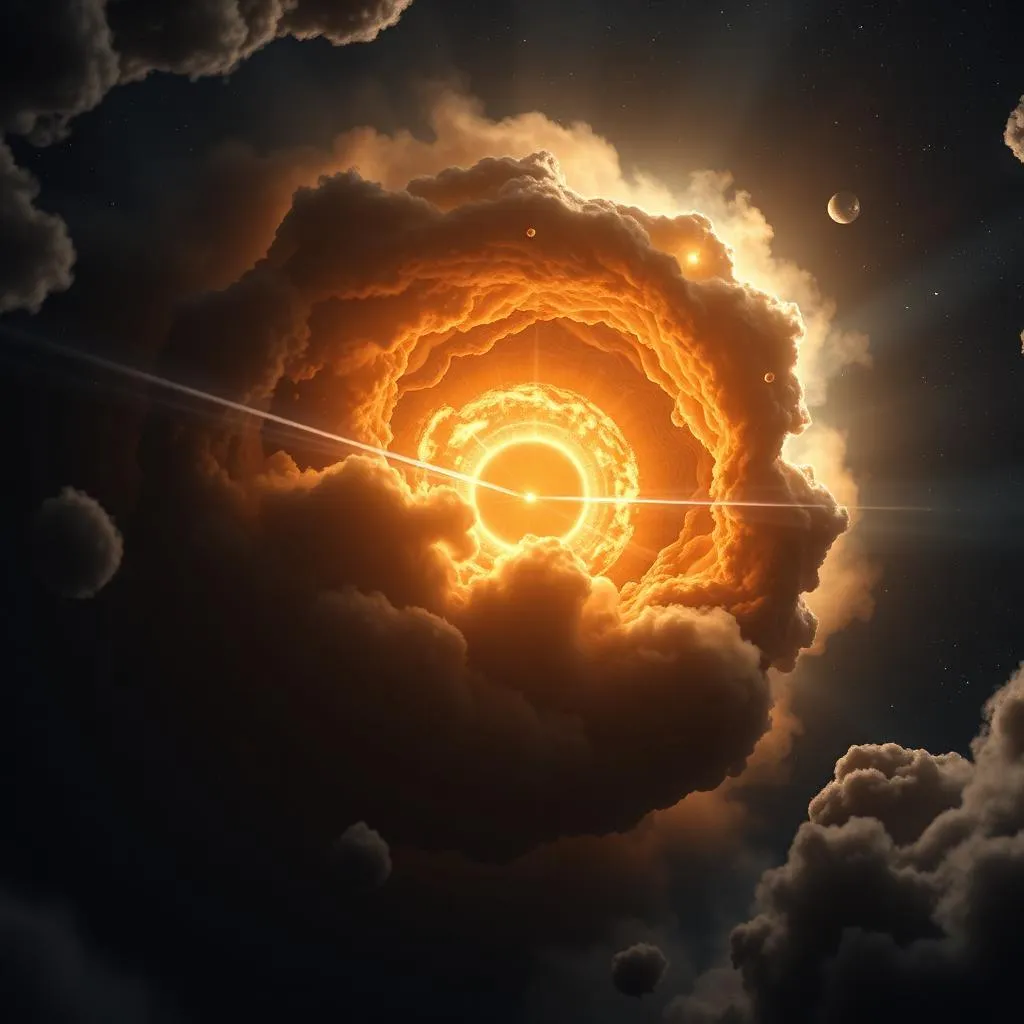
Every star begins the same way: a tiny local overdensity in an enormous cold cloud loses its battle with gravity. What happens next takes millions of years and rewrites the neighborhood. As the gas collapses inward, it rapidly heats up, forming a dense, swirling accretion disk. Eventually, the core pressure and temperature cross the threshold for nuclear fusion, and a new sun violently ignites, blowing away the remaining stellar dust with powerful solar winds.
- 01Molecular CloudMillions of years
A cold, dense region of a giant molecular cloud (mostly H₂) starts to contract under its own gravity, often triggered by a nearby supernova shockwave.
Stage metricsEst · NASA GSFC / ESA Herschel- Temperature
- 10 K
- Density
- 10² cm⁻³
- Radius
- 31.6 ly
- Duration
- 10 Myr
- 02Prestellar Core~100,000 years
A dense clump collapses. As it falls inward, gravitational energy is converted to heat. The core spins faster and flattens into a disk.
Stage metricsEst · Herschel Gould Belt Survey- Temperature
- 20 K
- Density
- 10⁵ cm⁻³
- Radius
- 20,000 AU
- Duration
- 100 kyr
- 03Protostar~1 million years
A hot central object forms, still gaining mass from its accretion disk. Powerful bipolar jets punch out along the rotation axis, blowing away leftover gas.
Stage metricsEst · Spitzer / JWST c2d survey- Temperature
- 3.0k K
- Density
- 10¹⁰ cm⁻³
- Radius
- 5 AU
- Duration
- 1 Myr
- 04T Tauri Star~10 million years
The star is now visible, but not yet fusing hydrogen. It contracts slowly, surrounded by a protoplanetary disk where planets are already assembling.
Stage metricsEst · NASA ADS / Hubble- Temperature
- 4.0k K
- Density
- 10¹⁵ cm⁻³
- Radius
- 4.30 R⊙
- Duration
- 10 Myr
- 05Main SequenceBillions of years
Core temperature crosses ~10 million K. Hydrogen fusion ignites. The star settles into a long, stable adulthood — like our Sun, currently 4.6 billion years in.
Stage metricsEst · NASA Sun Fact Sheet- Temperature
- 5.8k K
- Density
- 10²⁴ cm⁻³
- Radius
- 1.01 R⊙
- Duration
- 10 Gyr
Estimate · characteristic values for a Sun-mass star. Real ranges span orders of magnitude. Sources: NASA GSFC, JPL Sun Fact Sheet, ESA Herschel, Spitzer c2d.
Every atom in your body heavier than helium was forged inside a star.
Made in the first three minutes after the Big Bang. Still ~98% of ordinary matter in the universe.
Fused in the cores of stars over billions of years, then dispersed by stellar winds and planetary nebulae.
Forged in the extreme conditions of supernovae and neutron star collisions. Scattered across space by the blast.