Two trillion
galaxies.
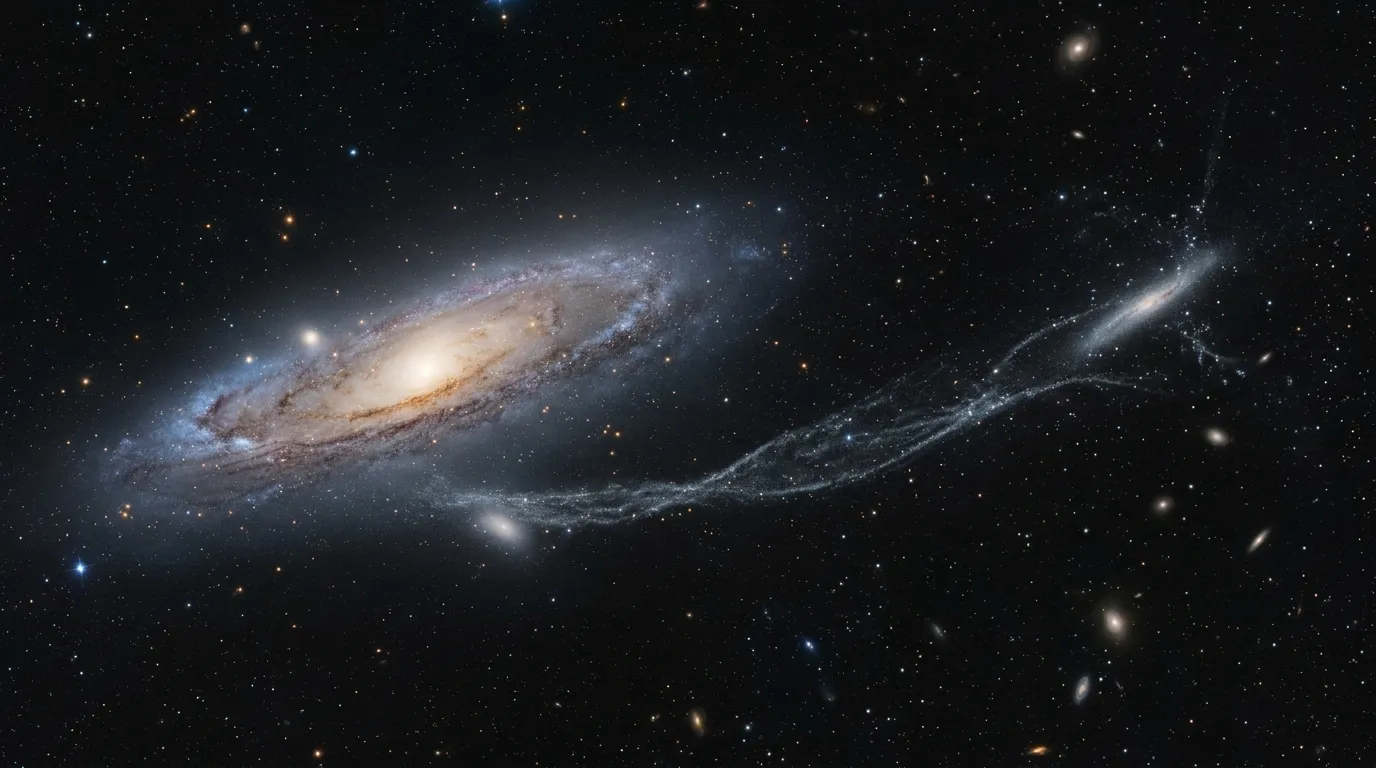
Each one a gravitationally bound city of hundreds of billions of stars, gas, dust, and dark matter — separated by millions of light-years of near-perfect vacuum.
Four shapes.
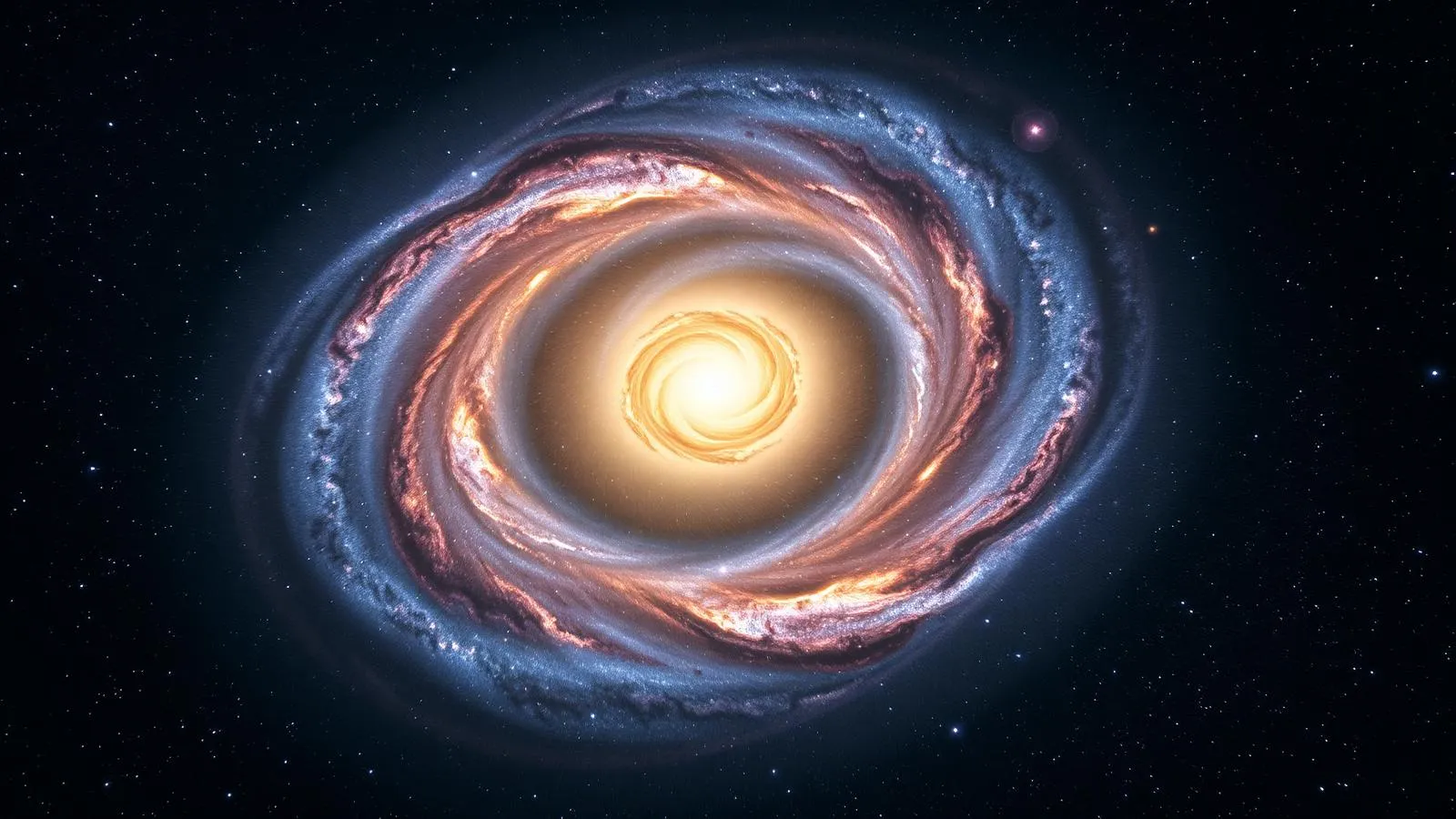
Edwin Hubble sorted galaxies by shape in 1926. His scheme still forms the backbone of galactic classification today.
- 2 TrillionEstimated galaxies in the observable universe, containing more stars than grains of sand on Earth.
- 13.4 BillionAge in years of JADES-GS-z13-0, currently the oldest and most distant galaxy ever confirmed by James Webb.
- 4.5 BillionYears until the Milky Way collides with Andromeda, eventually merging into a giant elliptical galaxy.
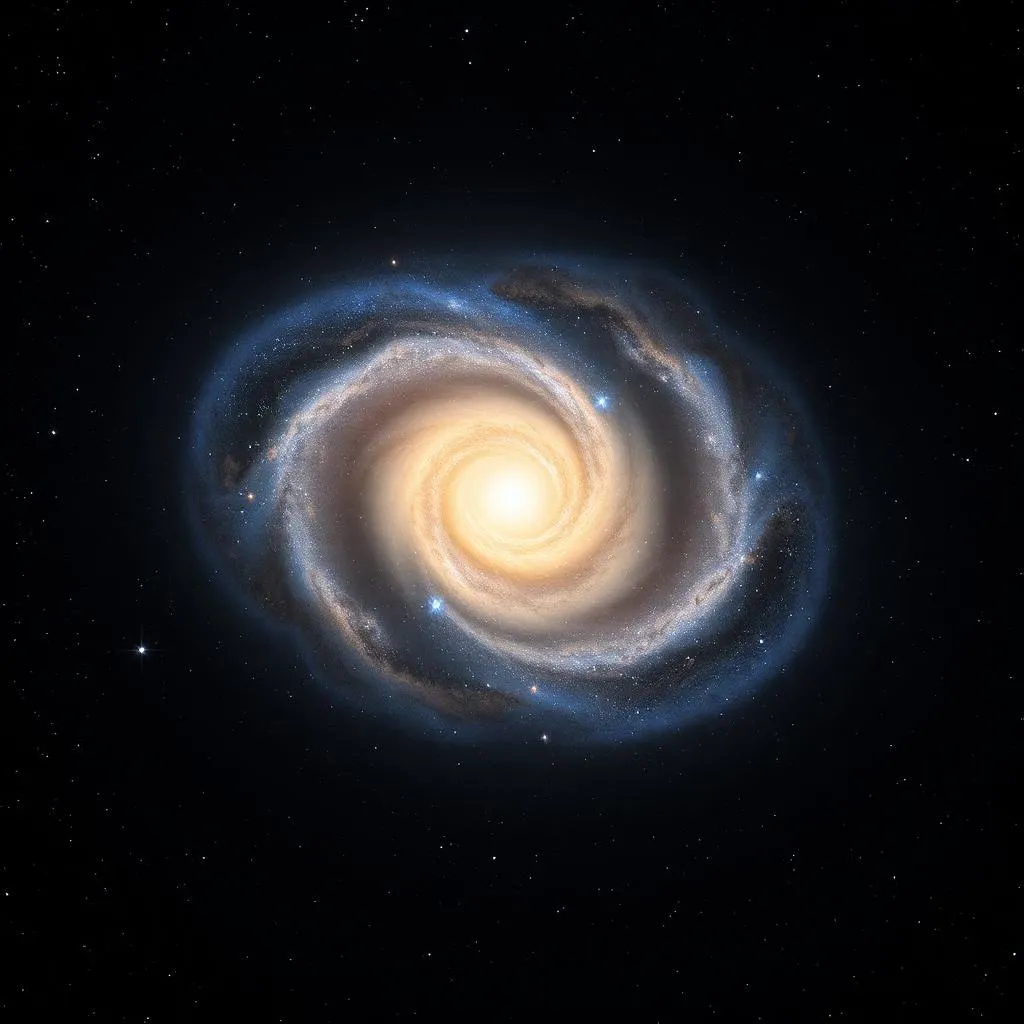
Rotating disks with sweeping arms of young stars
About 60% of galaxies in the local universe. Density waves compress gas in the arms, triggering new star formation — that's why the arms glow blue with hot young stars while the bulge is yellow and old.
- Shape
- Flat disk with central bulge
- Star population
- Mix of young and old
- Examples
- M31 Andromeda, M74, M51 Whirlpool
Real photos of spiral galaxies.
Fetched live for the search "Andromeda Galaxy". Switch the galaxy type below to change the feed.
The Local Group.
The Milky Way's home cluster — about 80 galaxies gravitationally bound across ~10 million light-years, dominated by three big spirals.
Our home galaxy is a barred spiral spanning roughly 100,000 light-years across. It contains an estimated 100 to 400 billion stars, massive amounts of interstellar gas and dust, and a central supermassive black hole known as Sagittarius A*. The solar system resides on one of the minor spiral arms, known as the Orion Arm, about 27,000 light-years from the galactic core. The Milky Way is continually consuming smaller dwarf galaxies that get too close to its immense gravitational pull.
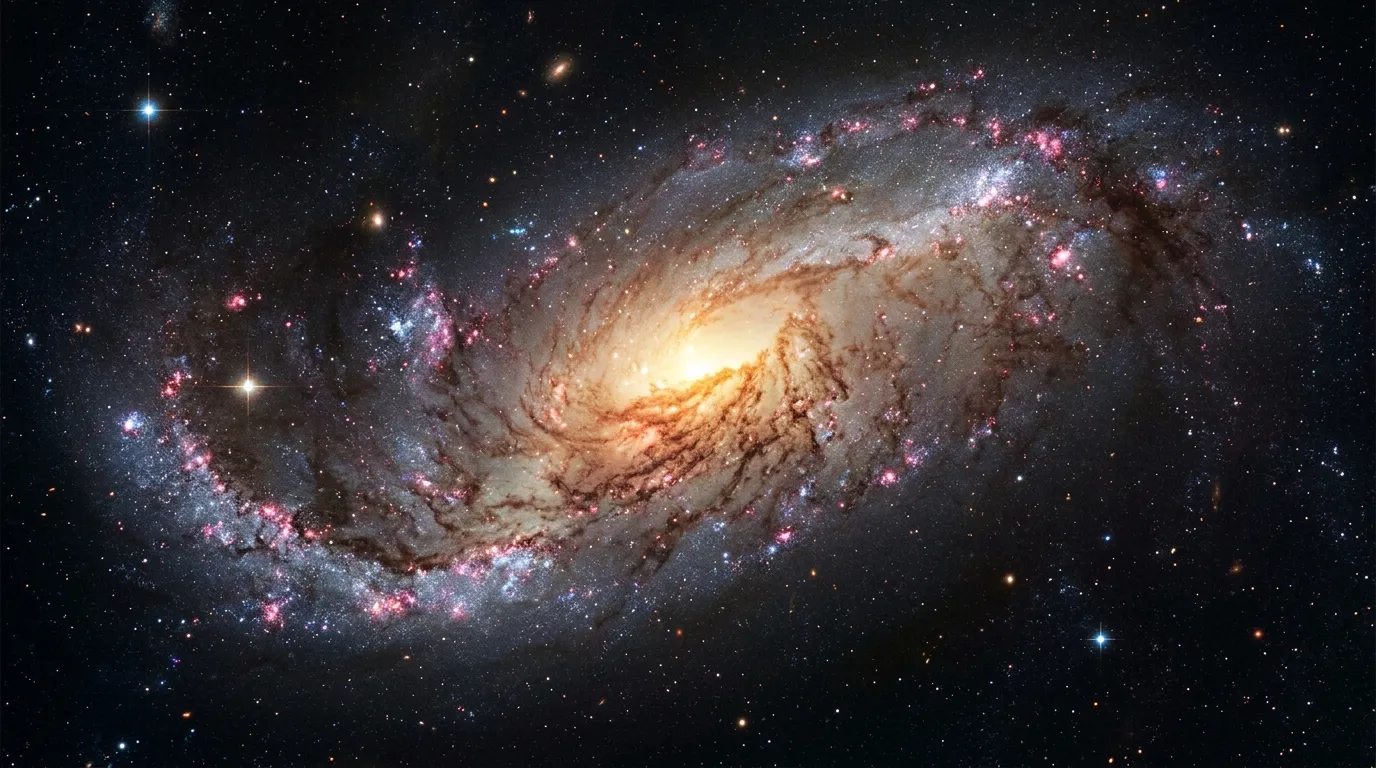
The Andromeda Galaxy is the largest galaxy in the Local Group and the nearest major galactic neighbor to the Milky Way. It is a massive spiral galaxy, estimated to contain around one trillion stars—more than twice as many as our own galaxy. Andromeda is currently hurtling toward the Milky Way at about 110 kilometers per second. In approximately 4.5 billion years, the two galaxies will collide and merge to form a gigantic elliptical galaxy.
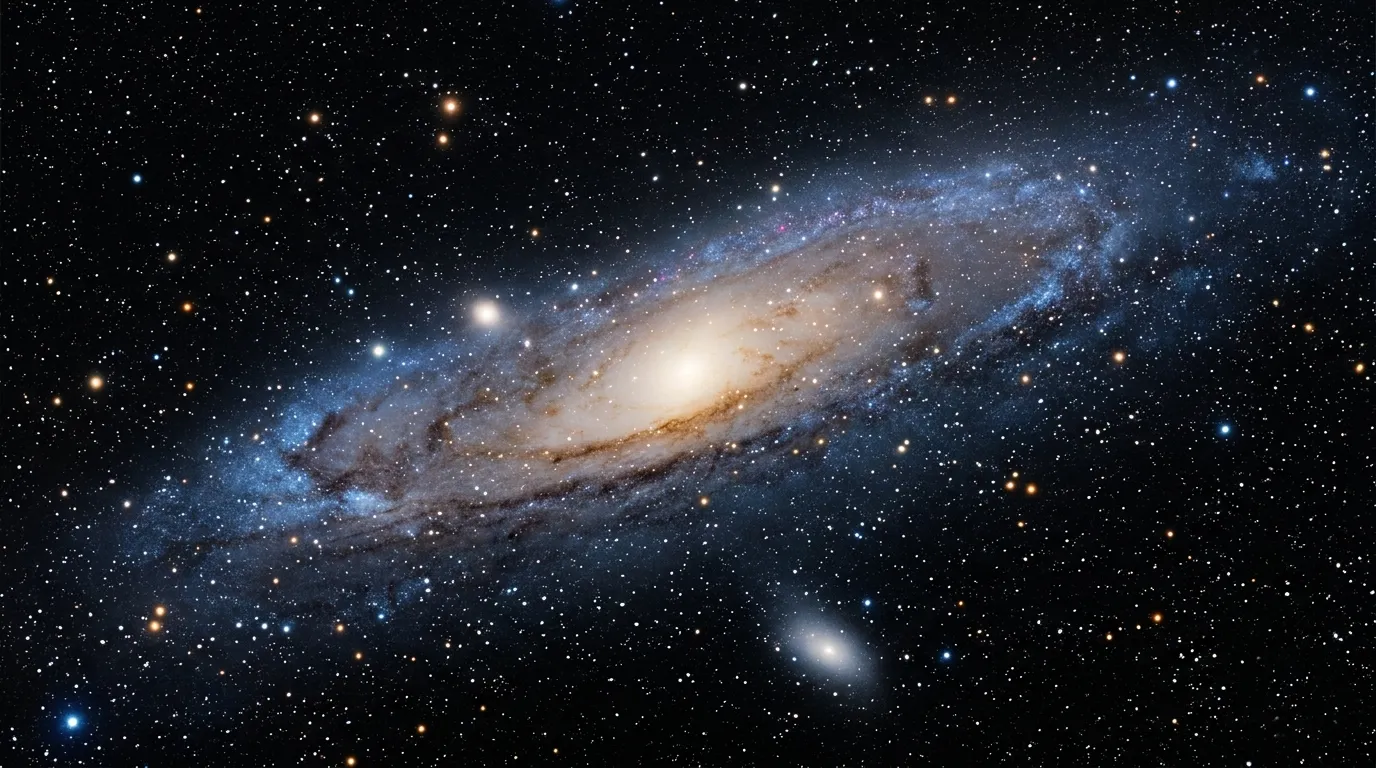
The Triangulum Galaxy is the third-largest member of the Local Group. Unlike Andromeda and the Milky Way, it does not have a central bar and its spiral arms are loosely wound. It is highly active in star formation, featuring massive H II regions (like NGC 604) where giant clouds of ionized hydrogen gas are giving birth to new, massive stars. It is believed to be gravitationally bound to the larger Andromeda galaxy.
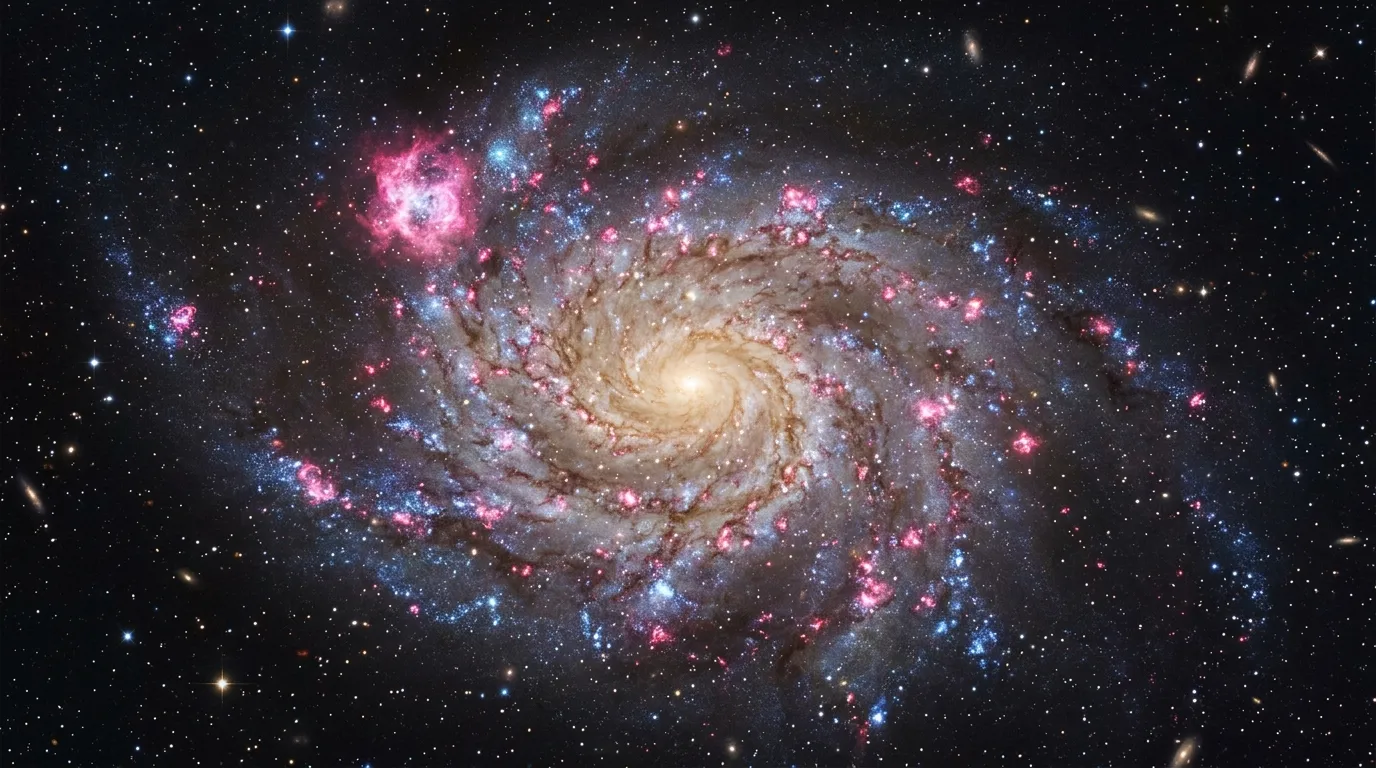
The Large Magellanic Cloud (LMC) is a satellite galaxy of the Milky Way. Though classified as a Magellanic spiral or irregular dwarf galaxy, it is rich in gas and dust, leading to intense star formation. It is famously home to the Tarantula Nebula, the most active starburst region in the entire Local Group. The LMC is currently being disrupted by the tidal forces of the Milky Way, slowly being stretched and ultimately absorbed.
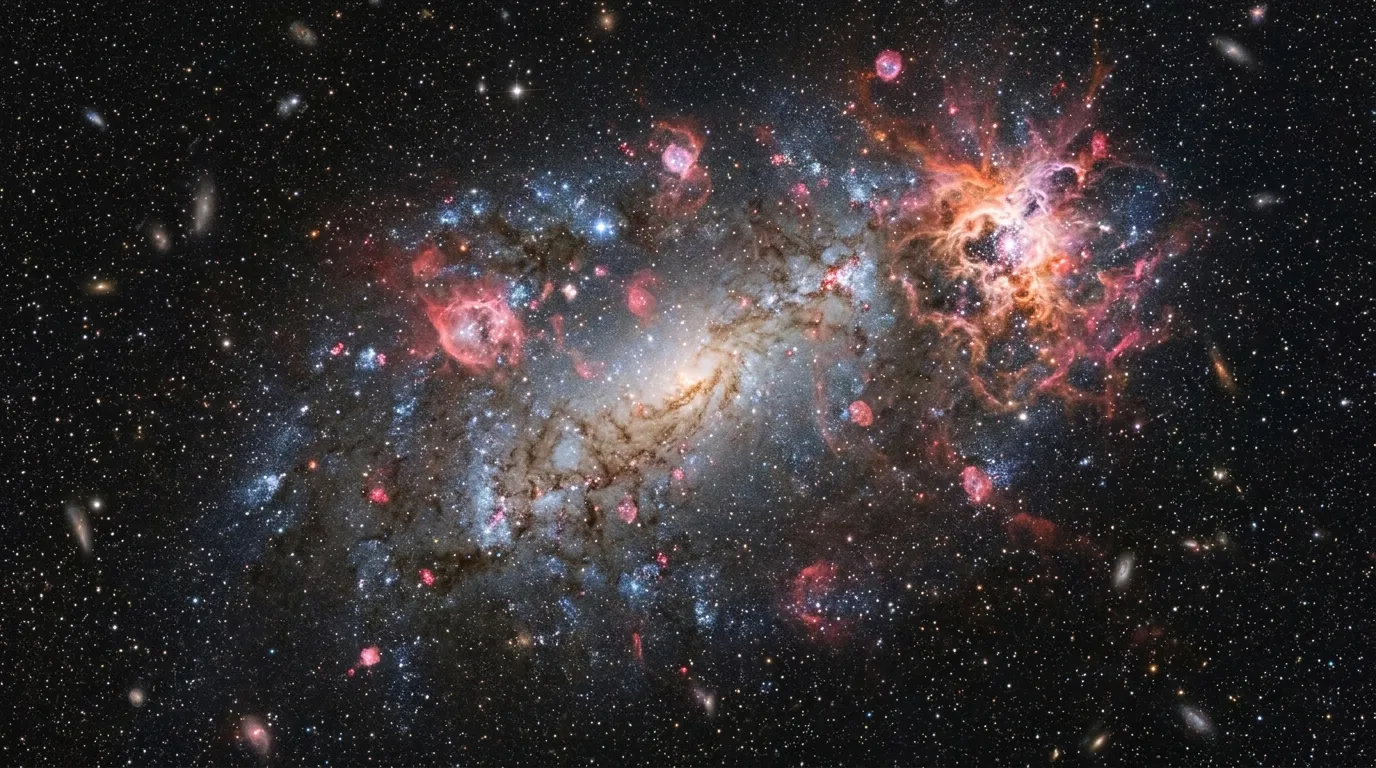
The Small Magellanic Cloud (SMC) is a dwarf irregular galaxy that orbits the Milky Way. It contains several hundred million stars and has a distinct bar-like structure, though it has been severely distorted by gravitational interactions with both the Milky Way and the Large Magellanic Cloud. A long bridge of gas, known as the Magellanic Bridge, connects the SMC directly to the LMC.
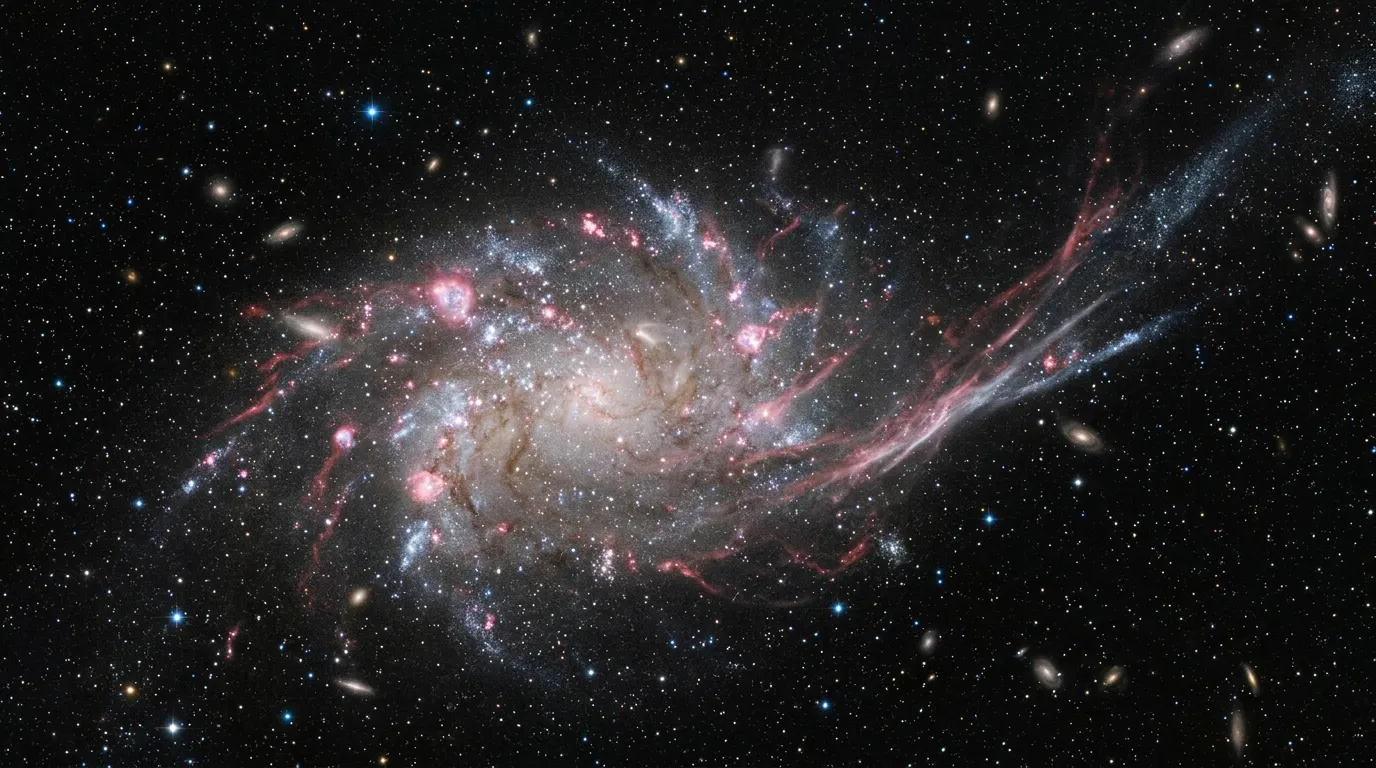
The Sagittarius Dwarf Spheroidal Galaxy is one of the closest companion galaxies to the Milky Way. It is currently in the process of being torn apart by the extreme tidal forces of our galaxy. As it orbits, it leaves behind a massive, wrapping trail of stars known as the Sagittarius Stream, which completely encircles the Milky Way. It is a prime example of galactic cannibalism in action.