
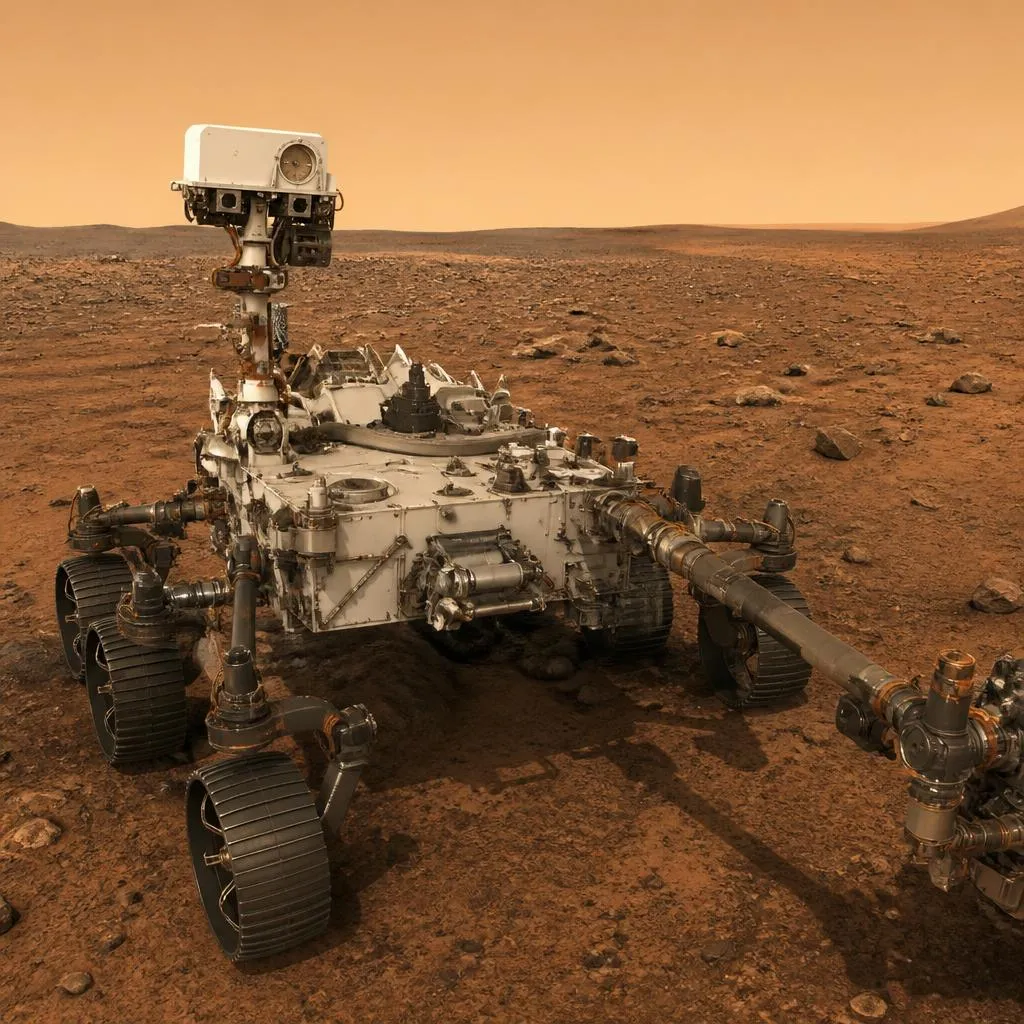
Machines that go
where we cannot.
Robotic probes, crewed capsules and orbiting laboratories extend our senses across the Solar System and beyond. Here is how we build them, launch them and keep them alive.
Missions that changed perspective
Select a mission to see where it went, what it proved, and what keeps it talking to Earth.
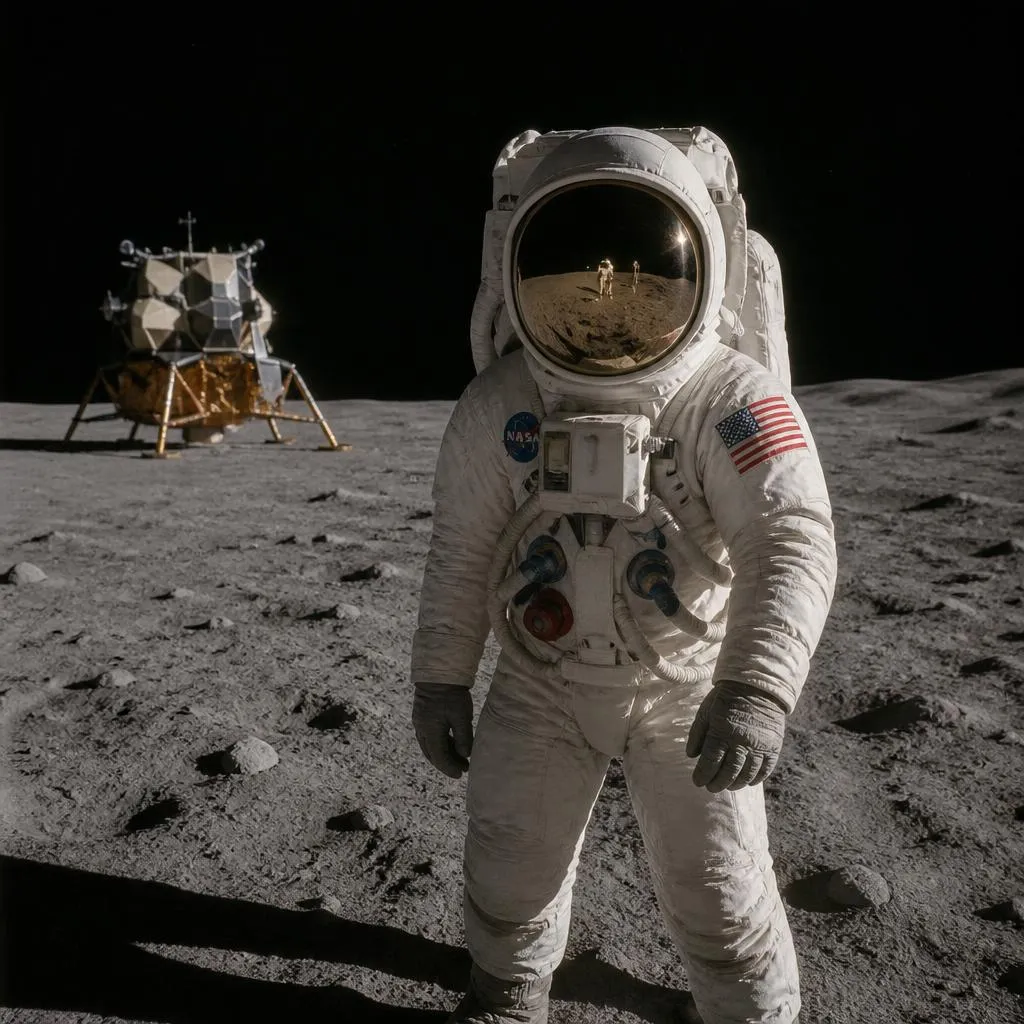
Apollo 11
Apollo 11 put the first humans on another world. Neil Armstrong and Buzz Aldrin walked on the Moon while Michael Collins orbited above.
What every probe needs
Whether it is a rover on Mars or a telescope at L2, a spacecraft is a system of subsystems. Pick one to see what it does.
Electricity in the void
Every spacecraft needs electricity. Solar panels work near the Sun, while radioisotope thermoelectric generators (RTGs) keep probes alive in deep space where sunlight is faint.
ISS solar arrays · Voyager RTG · Perseverance MMRTG
Design a mission
Choose a destination and a payload. The constraints — power, communications, launch vehicle and travel time — change dramatically with each choice.
Surface explorer to Mars
Entry, descent and landing
The Deep Space Network
To talk to missions billions of kilometers away, we rely on the DSN — an international array of giant radio antennas that supports interplanetary spacecraft missions and some that orbit Earth.
- 70 MetersThe diameter of the DSS-14 "Mars" antenna, capable of communicating with Voyager 1.
- 20 KilowattsThe transmitter power used to send commands to spacecraft across the solar system.
- Desert SilenceStrategically placed in the Mojave Desert, shielded from the radio frequency interference of major cities.
Ready for launch?
Test your knowledge of rockets, orbits and spacecraft in Learner Mode — then explore the rest of the observatory.