
The whole
shebang.
13.8 billion years ago the universe was smaller than an atom. Today it is a vast web of galaxies, held together by invisible matter and pulled apart by an unknown energy.
From a hot speck to today
Drag the slider to move through cosmic history. Each milestone reshaped the universe and set the stage for the next.
Inflation
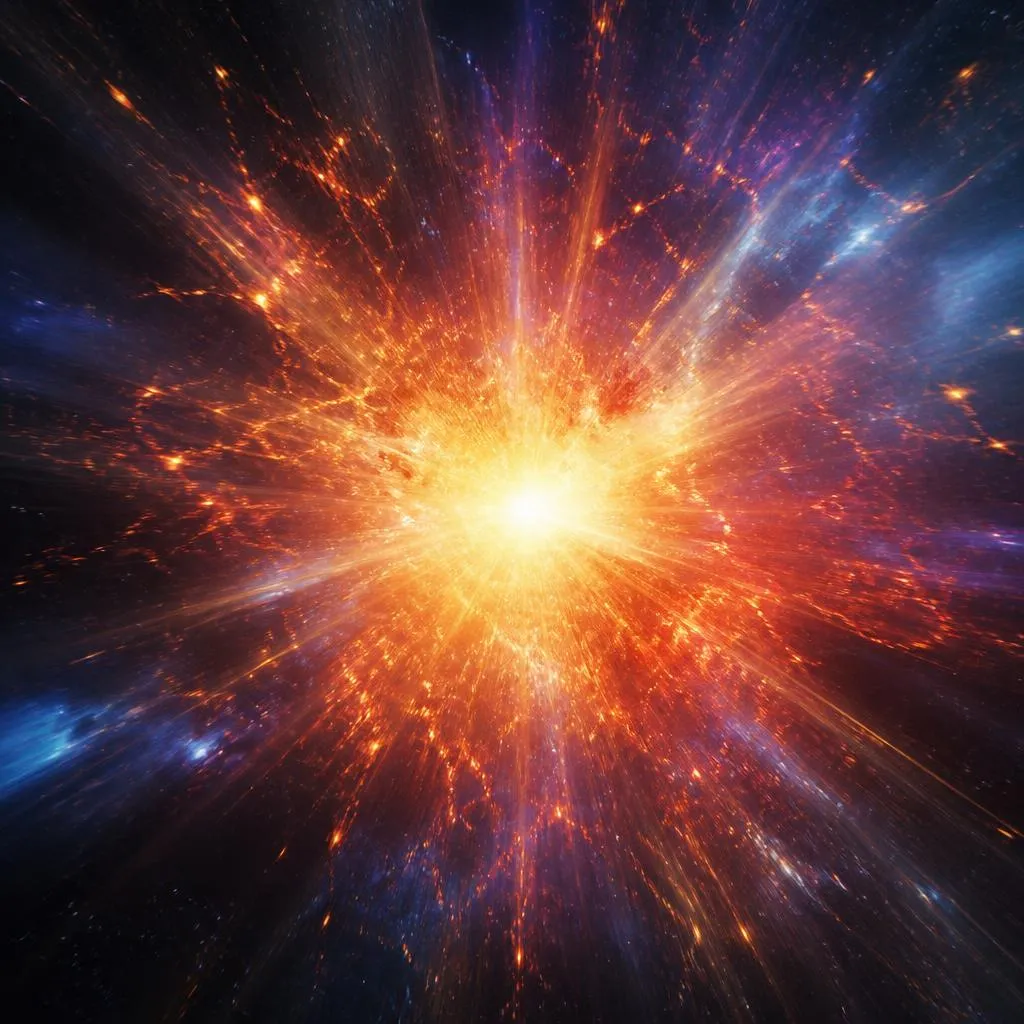
In the smallest fraction of a second after the Big Bang, the universe underwent a period of hyper-accelerated expansion known as cosmic inflation. This brief but violent epoch stretched space faster than the speed of light, smoothing out macroscopic irregularities and locking in quantum fluctuations that would eventually seed the cosmic web. The energy density was so extreme that the fundamental forces of nature were still unified into a single primordial force.
95% is missing
Stars and galaxies account for less than 5% of the cosmos. The rest is dark matter and dark energy — two puzzles that define modern cosmology.
The observable universe is approximately 13.8 billion years old, but because space itself has been expanding since the Big Bang, the edge of the observable universe is now about 46.5 billion light-years away in every direction.
A mysterious repulsive force driving the accelerated expansion of the universe. We do not yet know what it is.
Accelerating expansion · Distant supernovae · Large-scale structure
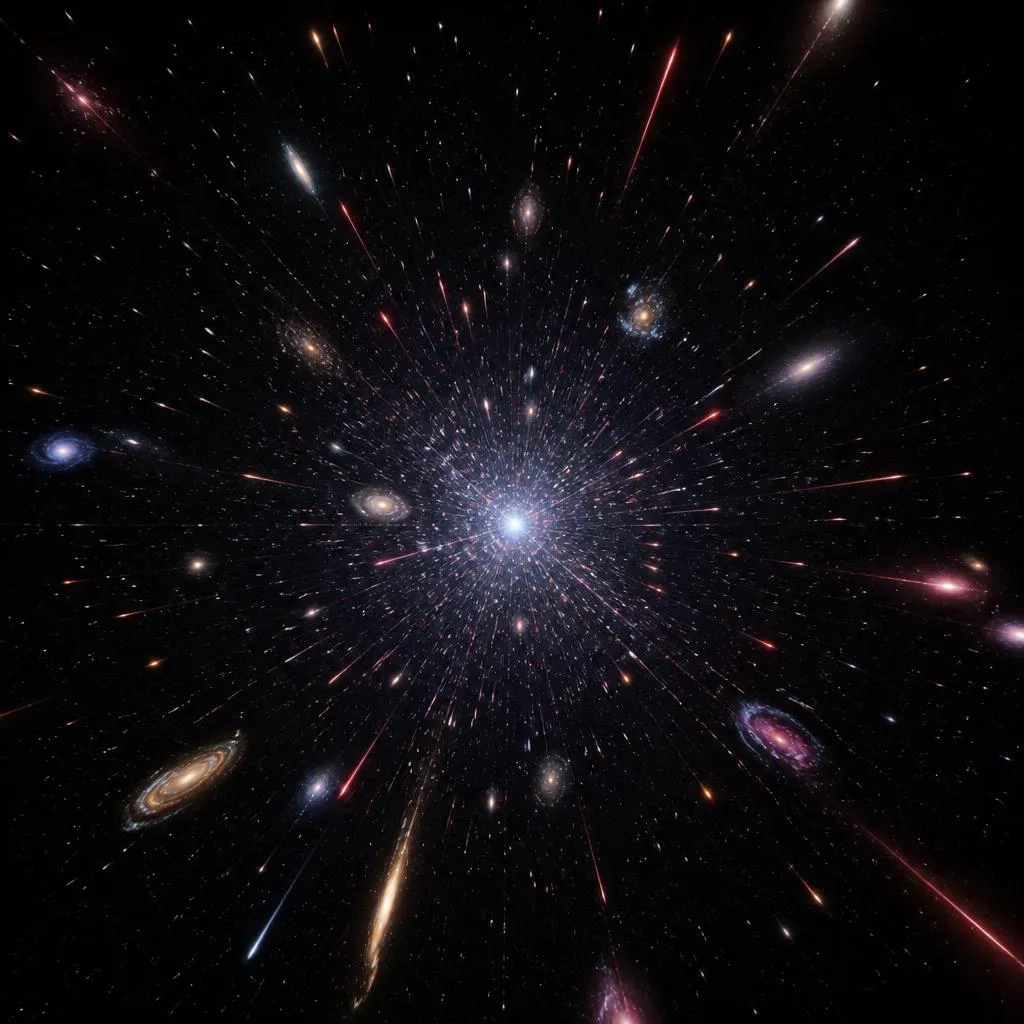
Distant galaxies recede faster and faster as space stretches.
Filaments and voids
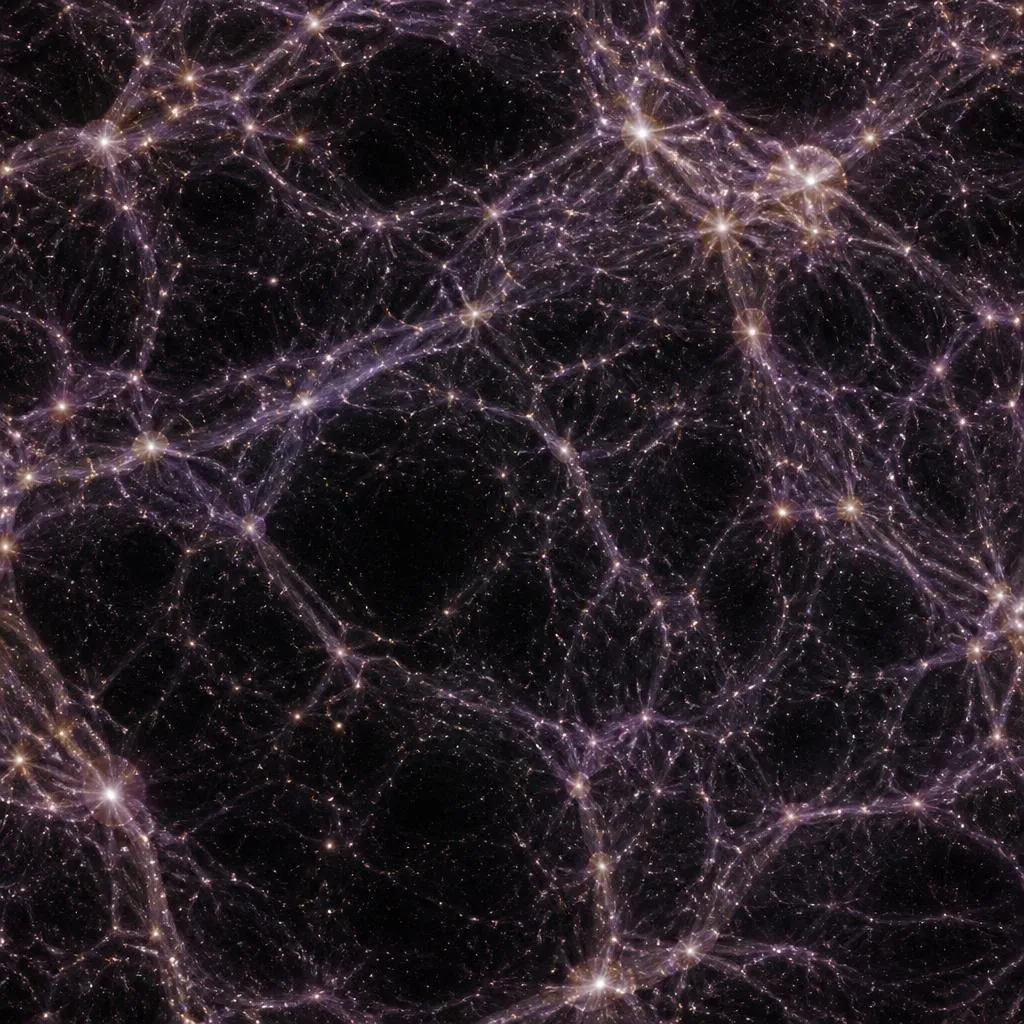
On the largest scales, galaxies are not scattered randomly. They cluster along filaments of dark matter, forming a cosmic web with enormous empty voids in between.
Nesting dolls of size
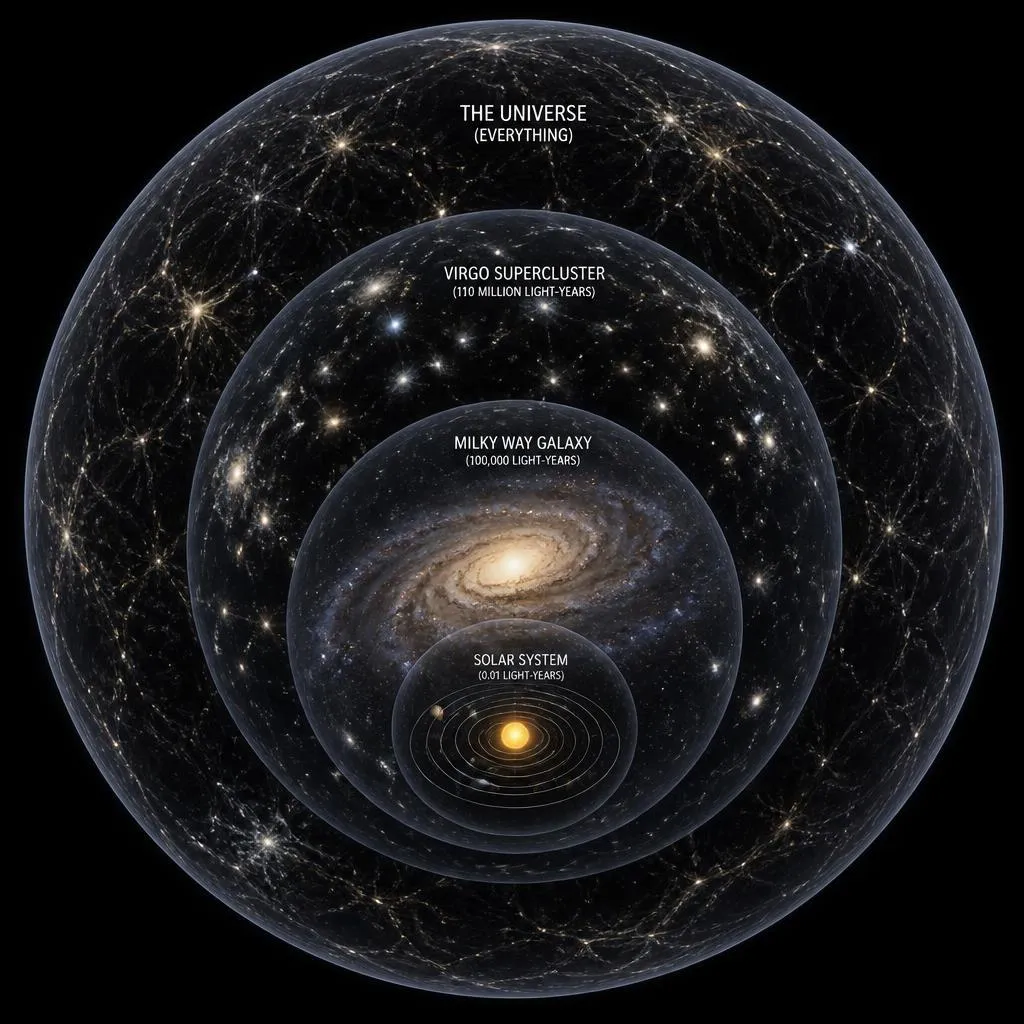
The Solar System sits inside the Milky Way galaxy, which sits inside the Virgo supercluster, which sits inside the observable universe. Each step is vastly larger than the last.
Keep going deeper
Cosmology connects every other module. Study it in Learner Mode, or see the objects that fill this vast structure.